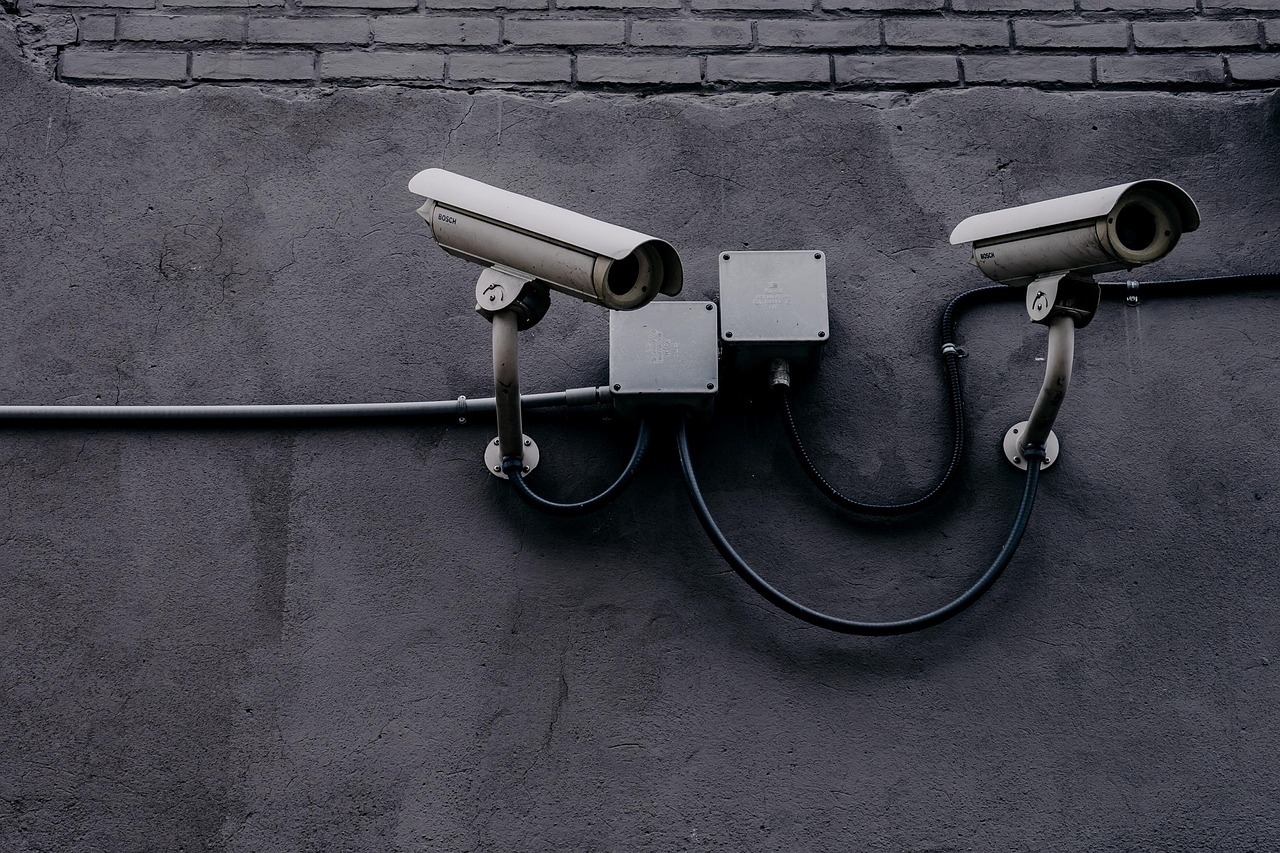

Cameras rarely fail because rain gets through the housing. They fail because water gets into the cable connector, condensation forms inside a cheap lens cover, or salt eats the bracket. Ratings tell you how well the camera body resists dust, water and knocks under laboratory conditions. The installation decides whether the whole system survives real weather. This guide explains both.
How to read an IP code
The IP code (ingress protection) comes from the international standard IEC 60529. It has two digits. The first is protection against solid objects and dust, the second against water. An “X” means that part was not rated.
First digit: dust and solids
| Digit | Meaning | For cameras |
|---|---|---|
| 0 to 4 | Protection from hands, fingers, tools and wires down to 1 mm | Indoor products |
| 5 | Dust-protected: some dust may enter, not enough to interfere | Sheltered outdoor use |
| 6 | Dust-tight: no dust enters, checked under vacuum | What you want outdoors, in deserts and on beaches |
Second digit: water
| Digit | Test in short | Real-world meaning |
|---|---|---|
| 4 | Splashing from any direction | Light rain on a sheltered camera |
| 5 | Water jets from a 6.3 mm nozzle, 12.5 liters a minute | Heavy rain, garden hose |
| 6 | Powerful jets from a 12.5 mm nozzle, 100 liters a minute | Storm-driven rain, waves splashing, hosing down |
| 7 | Temporary immersion, typically up to 1 m for 30 minutes | Survives a flood or a dunk |
| 8 | Continuous immersion beyond IPX7, on terms the maker states | Underwater cameras; read the maker’s depth and time |
| 9 (9K in some standards) | High-pressure, high-temperature jets | Pressure washing, vehicle and food-plant cleaning |
The important detail: the jet tests (5 and 6) and the immersion tests (7 and 8) are different tests. A camera that survives sitting in still water may not survive powerful jets from the side, and vice versa. That is why good outdoor cameras often carry a double rating such as IP66/IP67. If a spec sheet says only IP67, it has not necessarily passed the IP66 jet test.
Which IP rating does a live camera need?
| Rating | Good for | Not enough for |
|---|---|---|
| IP64 / IP65 | Under eaves, porches, sheltered walls | Exposed poles, coasts, mountain ridges |
| IP66 | Exposed walls and poles, storms, spray | Spots that can flood |
| IP67 | Low spots that may flood briefly | Powerful jets, unless also rated IP66 |
| IP66/IP67 together | Almost any outdoor site | Permanent immersion |
| IP68 | Underwater cameras and fittings | Check depth and duration; jets not implied |
Real examples from makers’ spec sheets: the Reolink Go PT Ultra battery camera is rated IP64, the Reolink TrackMix PoE IP65, the Reolink RLC-811A IP67 and the AXIS M1135-E Mk II IP66 with IK10 and NEMA 4X. Starlink lists its Mini dish as IP67 Type 4, but only with the DC power cable and the Starlink plug or cable installed; its spec sheet notes that a standard RJ45 cable removes the IP67 rating. That shows how much ratings depend on the connectors.
IK ratings: how hard a knock the camera survives
The IK code comes from IEC 62262. It tells you the impact energy, in joules, an enclosure withstands. For cameras within reach of people, balls or falling branches, IK10 is the usual target, and many dome cameras carry it.
| IK code | Energy | Equivalent drop | Where it matters |
|---|---|---|---|
| IK07 | 2 J | 0.5 kg from 40 cm | High, out-of-reach cameras |
| IK08 | 5 J | 1.7 kg from 30 cm | Moderate risk |
| IK09 | 10 J | 5 kg from 20 cm | Public spaces |
| IK10 | 20 J | 5 kg from 40 cm | Within reach; vandal-prone places |
Corrosion: the sea and the snow
IP and IK ratings say nothing about corrosion. Near the coast, on boats and anywhere roads are salted, metal parts corrode quickly. In North America, the NEMA 250 enclosure types help: Type 4 is watertight against hose-directed water, and Type 4X adds corrosion resistance. Look for a 4X rating or a maker’s marine or “C5” corrosion claim, and use 316 stainless screws, straps and brackets. Avoid mixing stainless screws into an aluminum mount without an insulating washer, or the aluminum around the screw can corrode.
IP codes and NEMA types side by side
North American products often list a NEMA enclosure type instead of, or as well as, an IP code. The two systems test different things, so there is no exact conversion; NEMA types also cover things such as corrosion and ice that IP codes do not. The table shows the usual rough equivalents for camera work.
| NEMA type | Protects against | Roughly comparable IP | Camera use |
|---|---|---|---|
| 3R | Rain, sleet, snow; outdoor use | no close match; lower than IP66 | Sheltered boxes, not camera bodies |
| 4 | Windblown dust, rain, hose-directed water | about IP66 | Exposed cameras and junction boxes |
| 4X | As Type 4, plus corrosion | about IP66 | Coasts, boats, farms, salted roads |
| 6P | Prolonged submersion, corrosion | about IP68 | Flood-prone and underwater gear |
Treat the “comparable IP” column as a guide only. If a project or insurer asks for a specific rating, ask the maker for the actual test certificate.
The weak points you seal yourself
A camera can be IP66 and still let water in at the installation. Most leaks happen at these points:
- The RJ45 connector. The camera’s pigtail ends in a plug that is not waterproof on its own. Use the weatherproof cap the maker supplies, and keep it inside a junction box.
- Cable entries. Use a cable gland sized to the cable’s outside diameter, so the seal grips it all round. A gland meant for a thicker cable will leak.
- The drip loop. Let the cable dip below the point where it enters the camera, box or wall, so water runs off the lowest point instead of following the cable inside.
- Unused holes. Plug every unused entry with the maker’s blanking plug.
- Tape. Electrical tape is not a seal. It lifts in sun and traps water. Use self-amalgamating (self-fusing) tape or proper boots where you must wrap.
Boat, dock and underwater cameras
On boats and docks, cameras get the worst of everything: spray, salt, vibration and the occasional wave. Choose IP66/IP67 or better with a corrosion rating, and mount on the most rigid part of the structure. Underwater cameras need an IP68 rating with a stated depth and duration greater than your installation, plus a cable and connector rated for the same depth. Below the waterline, marine growth covers the lens within weeks in warm water, so plan regular cleaning. See camera for a public webcam for coastal setups.
Condensation and fog
Sealed housings can still fog up from the inside. Warm, damp air trapped during installation cools at night and condenses on the lens window. To avoid it, install on a dry day, do not open the housing outdoors, keep any desiccant packs the maker supplies, and do not drill extra holes. Cameras for cold climates often have heaters or breathing vents with a membrane that lets vapor out but keeps water out.
Sun and temperature
Check the operating temperature range on the spec sheet against your site’s coldest night and hottest day. Many consumer cameras list -10 °C to 55 °C (14 °F to 131 °F), as the Reolink RLC-811A and TrackMix do. Professional gear often goes lower: Axis lists -20 °C to 50 °C for the M1135-E Mk II, and Starlink lists -30 °C to 50 °C for the Mini dish. Direct sun heats a dark housing well above air temperature, so a sun shield or a shaded mount extends a camera’s life. In snow country, a camera that faces up collects snow on its window; a hood helps.
Seasonal care
Weatherproofing is not a one-time job. A short routine keeps a camera streaming for years:
- Spring: clean the lens window with fresh water and a soft cloth, clear spider webs and nests, check glands and the drip loop.
- Summer: look for heat problems: a camera that reboots in the afternoon may be overheating. Add shade.
- Autumn: clear leaves from junction boxes and solar panels, retighten straps and fixings before winter storms.
- Winter: watch for snow on the window and ice on the mount; check that heaters work if your camera has one.
- Near the sea: rinse salt off the housing and brackets every few months if you can reach them safely.
A weatherproofing checklist
- IP66 (or IP66/IP67) for exposed spots; IP65 only under shelter.
- IK10 if people can reach it.
- NEMA 4X or a marine claim and 316 stainless near salt water.
- Junction box over the connectors, caps on RJ45 plugs.
- Right-sized glands, plugged unused holes, drip loops everywhere.
- Outdoor-rated, UV-resistant cable; direct-burial type underground.
- Sun shield in hot places, heater or hood in cold ones.
- Look at the image after every big storm; fog or drops on the inside mean a leak.
Mounting details are in mounting on walls and mounting on poles. Choosing the camera itself: how to choose a live camera.
Do these next
- Pick a camera with the right rating for your site.
- Plan the power and protect it from surges.
- See cameras that run all winter on ridges and coasts.
Questions people ask
Is IP67 better than IP66 for a camera?
Not exactly. IP66 is a powerful water-jet test; IP67 is a temporary immersion test. They are different, and IP67 alone does not guarantee IP66. For exposed cameras, IP66 or a dual IP66/IP67 rating is best.
What does IP68 mean?
Continuous immersion beyond the IPX7 test, on conditions (depth and time) the maker states. Read the maker’s figures; IP68 does not imply resistance to powerful jets.
What does IK10 mean?
The enclosure withstands an impact of 20 joules, about a 5 kg mass dropped from 40 cm, under IEC 62262. It is the usual target for cameras people can reach.
Is IP65 enough for an outdoor camera?
Under an eave or porch, usually yes. On an exposed pole, coast or mountain, choose IP66 or better.
Why does my outdoor camera fog up inside?
Damp air trapped inside condenses when the housing cools at night. Install on a dry day, keep desiccant packs, never open the housing outdoors and do not drill extra holes.
Sources
- IEC 60529 Degrees of protection provided by enclosures (IP Code), consolidated edition (checked 2026-10-07)
- IEC 62262 Degrees of protection against external mechanical impacts (IK code) (checked 2026-10-07)
- IEC: IP ratings explained (checked 2026-10-07)
- Starlink Mini specification sheet (IP67 conditions, temperature) (checked 2026-10-07)
- AXIS M1135-E Mk II specifications (IP66, IK10, NEMA 4X) (checked 2026-10-07)
- Reolink RLC-811A specifications (IP67) (checked 2026-10-07)
- Reolink Go PT Ultra specifications (IP64) (checked 2026-10-07)
Last reviewed October 7, 2026 by the LiveLocation team. General information, not legal or electrical advice.